In modern well construction, cementing success often depends on consistent casing standoff. Even a well-designed cement slurry can underperform if centralizer performance varies along the wellbore.
Bow spring centralizers remain widely used in vertical and deviated wells. They can also be applied in many horizontal sections, particularly where flexibility is needed to navigate restrictions or where drag must be carefully managed. However, in long horizontal intervals with high side loads or extended-reach drilling (ERD), rigid centralizers (including spiral blade designs) are frequently preferred for their ability to maintain fixed standoff under continuous contact and sustained lateral forces. This article focuses primarily on bow spring centralizers and the manufacturing factors that determine their real-world reliability.
Cementing Performance Depends on Centralizer Consistency, Not Just Quantity
Inconsistent centralization commonly leads to:
- Cement channeling
- Uneven cement sheath thickness
- Micro-annulus formation
- Gas migration risks
These issues usually arise not from the absence of centralizers, but from variations in their performance under actual downhole conditions. The key factors influencing consistent performance are raw material quality, manufacturing precision, and comprehensive testing with full traceability.
Raw Material Control: The Foundation of Mechanical Performance
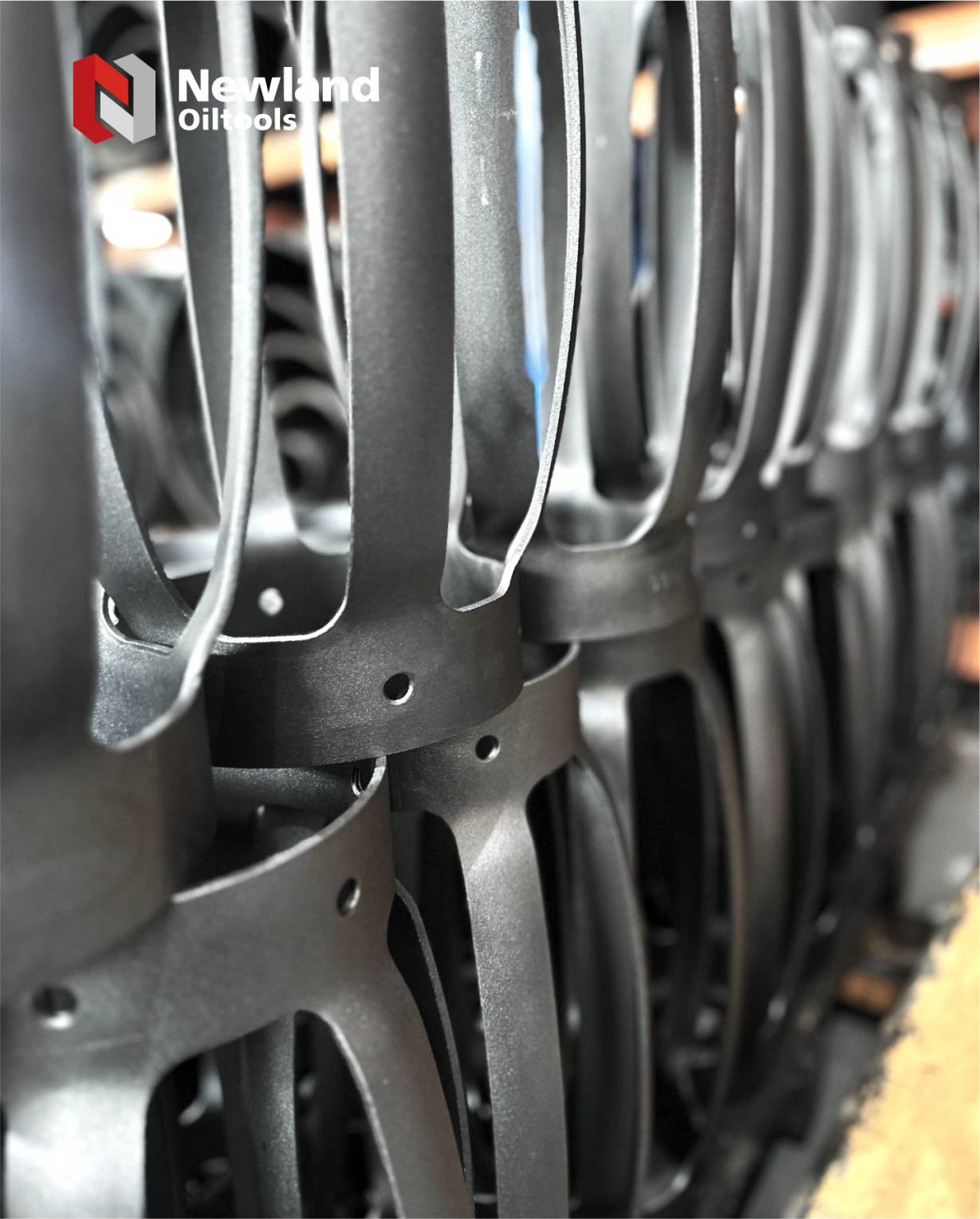
The mechanical behavior of a centralizer begins with the steel. Even advanced forming processes cannot compensate for inconsistent metallurgy. Responsible manufacturers perform thorough incoming material verification, including certified steel sources with documented yield strength, tensile strength, elongation, and impurity levels, plus chemical composition and mechanical property testing for each batch.
These parameters directly affect the centralizer's elastic restoring behavior and fatigue resistance — critical for maintaining reliable performance across large production volumes.
Manufacturing Precision: Achieving Uniformity in Large Orders
In long casing strings, hundreds or thousands of centralizers must perform consistently. Small deviations in bow geometry, collar diameter, or spring height can impact standoff, restoring force, and running friction.
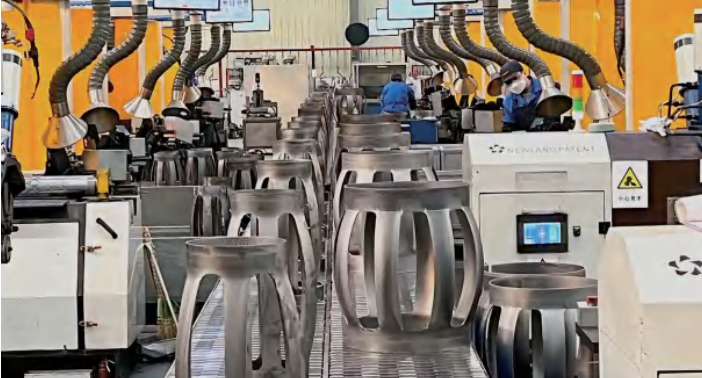
Modern bow spring centralizer production lines utilize high-precision cutting, automated forming, and controlled welding processes. One-piece designs offer better structural stability and geometric repeatability compared to traditional segmented and manually welded methods, helping ensure dimensional consistency across batches.
Heat Treatment: Ensuring Predictable Elastic Behavior
Heat treatment is one of the most critical steps, as it determines how the bow springs respond under load. Improper cycles can lead to reduced elasticity, inconsistent load response, or permanent deformation.
Advanced systems use automated temperature control, precise heating and cooling stages, and stress-relief processes. The objective is stable, predictable elastic performance that remains within API 10D parameters from batch to batch.
Restoring Force vs. Starting Force: Finding the Right Balance
While restoring force is an important metric, excessively high values can increase drag during casing running, particularly in deviated sections. Reliable bow spring centralizers maintain a balanced relationship between starting force, restoring force, and load-displacement behavior, staying consistently within API 10D specifications across production runs.
This balance helps minimize running risks while delivering the standoff needed for effective cementing.
Coating Technology: Reducing Friction and Enhancing Durability
In challenging well conditions — especially horizontal or extended-reach sections — the performance of coatings is determined more by adhesion strength and abrasion resistance than by application uniformity alone. Epoxy-based or powder coatings incorporating low-friction additives (such as graphite or similar compounds) are commonly used to maintain reduced friction coefficients even after prolonged contact and mechanical wear. These formulations help preserve the centralizer’s ability to reduce drag during casing running and protect the base material throughout the cementing operation. Proper surface preparation and coating selection are essential to prevent premature loss of low-friction properties in high-contact environments.
Testing, Traceability, and Quality Management Systems
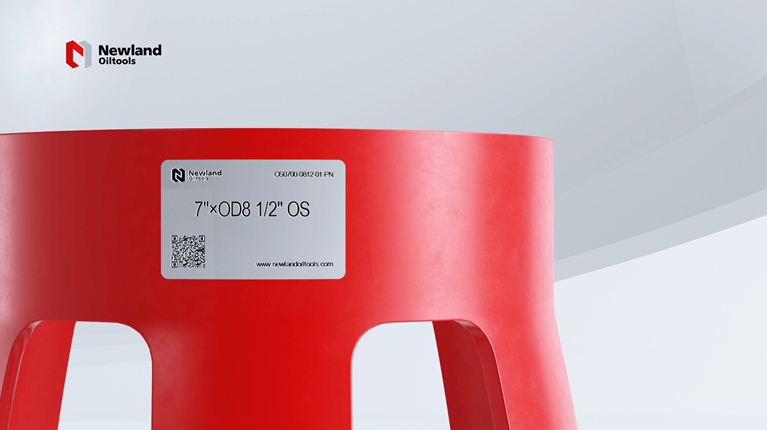
API 10D compliance forms the baseline requirement. Leading manufacturers also invest in full-scale mechanical performance testing to evaluate restoring force, starting force, and standoff behavior under controlled laboratory conditions that simulate key aspects of downhole loading.
Equally important are quality management systems compliant with API Spec Q1 and ISO 9001:2015, which enable complete batch traceability — linking each product to raw material certificates, production parameters, heat treatment records, and test results. This documentation supports project audits and post-job investigations.
Case Study: Extended-Reach Drilling Application
In an extended-reach drilling project for an international operator, the intermediate casing section featured relatively high dogleg severity. Newland Oiltools opted for one-piece bow spring centralizers with strict manufacturing and traceability controls.
Throughout casing running, the centralizers maintained structural integrity with no additional drag spikes attributable to bow deformation or sticking, even under the complex trajectory. Post-cementing cement bond logs (CBL/VDL) showed improved cement bond quality and more uniform sheath placement compared to offset wells in the area. This contributed to better overall zonal isolation and helped reduce the likelihood of remedial cementing. Detailed test reports and performance data from this and similar projects are available upon request.
Bow spring centralizers are well-suited for vertical to moderately deviated wells and many horizontal sections where their elastic restoring force and flexibility provide advantages, especially when combined with effective low-friction coatings and proper spacing. In long horizontal intervals with sustained high side loads or extended-reach drilling, rigid centralizers are often the preferred choice for maintaining consistent standoff and resisting compression under continuous borehole contact. Proper selection should always consider well trajectory, casing size, side forces, and operational conditions.
Conclusion
The performance of high-quality bow spring centralizers results from tight control across the entire production chain — from certified raw materials and precision manufacturing to heat treatment, coatings, testing, and full traceability. When these elements are supported by robust quality systems, centralizers deliver consistent standoff, improved cementing efficiency, and support for reliable zonal isolation with reduced risk to long-term well integrity.
If you are planning a casing program or evaluating centralizer suppliers, feel free to reach out via the contact page for detailed technical specifications, recent batch test data, and engineering support tailored to your well design. Reliable centralization begins with reliable manufacturing and supply chain control.
FAQ
Q: What makes a high-quality bow spring centralizer essential for effective oil well cementing?
A: A high-quality bow spring centralizer ensures consistent casing standoff, which directly improves mud displacement efficiency, cement sheath integrity, and helps achieve effective zonal isolation. Inconsistent performance can lead to cement channeling or micro-annulus issues, especially in large casing programs.
Q: How does strict raw material control improve bow spring centralizer performance?
A: Certified steel with verified yield strength, tensile strength, elongation, and low impurity levels provides better elastic restoring behavior and fatigue resistance. This helps maintain stable restoring force across batches, reducing the risk of deformation during casing running and cementing operations.
Q: What are the advantages of one-piece bow spring centralizers over traditional designs?
A: One-piece bow spring centralizers, produced through integrated automated forming and welding, deliver superior dimensional consistency, structural stability, and repeatability compared to segmented manual welding methods. This is particularly important for uniform performance in long casing strings.
Q: Why is the balance between restoring force and starting force important when selecting bow spring centralizers?
A: A proper balance prevents excessive drag during casing installation while still providing adequate standoff for effective cement placement. Reliable bow spring centralizers stay within API 10D specifications across production runs, minimizing running risks in deviated wells.
Q: How do API 10D testing and full traceability benefit centralizer buyers?
A: API 10D testing validates restoring force, starting force, and structural integrity, while complete traceability under API Spec Q1 and ISO 9001 links each batch to raw material certificates, heat treatment records, and test data. This supports quality assurance, project audits, and reliable supply for cementing projects.
Q: When should operators choose bow spring centralizers versus rigid centralizers for cementing?
A: Bow spring centralizers are widely used in vertical, deviated, and many horizontal wells where elastic restoring force and flexibility are needed. Rigid centralizers are better suited for highly deviated sections, extended-reach drilling with high side loads, or areas requiring maximum mechanical support.
Q: What key factors should be considered when sourcing bow spring centralizers for oil well cementing?
A: Focus on certified raw materials, precision manufacturing, controlled heat treatment, epoxy or powder-based low-friction coatings, API 10D compliance, and full batch traceability. Requesting detailed test reports helps ensure consistent performance and reduced operational risks in your cementing operations.